
Views: 0 Author: Site Editor Publish Time: 2025-11-12 Origin: Site


If you want to open a trampoline park with indoor trampoline equipment, you need to plan well. You should focus on safety. You also need to know how to make money. Vasia’s Multi-Activity Indoor Trampoline Park shows how new ideas and high safety rules help a lot. The world market for indoor trampoline parks is growing quickly. This means there are good chances for you. Watch out for costs that keep going up. Make sure your indoor trampoline equipment follows the best safety rules. Get ready for easy steps that will help you start an indoor trampoline park with confidence.
Make sure all equipment is safe. This helps people trust your park. It also makes them want to come back.
Pick a business plan that families like. Make sure people of all ages can have fun. Offer different activities to get more visitors.
Write a business plan with a budget. Add ideas for marketing and rules you must follow. This keeps you organized and helps you stay focused.
Connect with your community at local events. Use promotions to get people interested. Making friends in your area helps your park look good. It also brings in more guests.
Change your attractions often. Think about adding new things. Keeping your park exciting makes people want to visit again. It also brings new customers.
If you want to start a trampoline park, you should learn how the business works. First, pick a business model that fits your goals. Your trampoline park should be fun for families, kids, and adults who like to exercise.
Here is a simple table of popular business models for trampoline parks:
Business Model Trend | Description |
|---|---|
Promoting Exercise | Show your trampoline park as a fun place for fitness and health. |
Engaging Attractions | Add things like climbing walls, obstacle courses, and play zones. |
Themed Events | Plan special events to bring in new groups and make things exciting. |
Fundraising Opportunities | Let people use your space for fundraising events to find new customers. |
You can use these ideas too:
More adults are coming to trampoline parks for fun and exercise.
You can offer special classes, like fitness or gymnastics, to get more customers.
Events and deals for adults help your trampoline park grow.
Trampoline parks give people a special experience. People visit for excitement, not just to work out. This makes your trampoline park different from regular gyms. Use this to help your business stand out.
You have many ways to make money. You can charge admission fees, sell party packages, book groups, sell merchandise, and offer food. If you sell memberships, people will come back more often. Special events and group bookings help your trampoline park earn more. Birthday parties and memberships are important for your income. If you add party rooms and snacks, you can make even more money.
Tip: Try different ways to earn money. Don’t just sell tickets. Offer memberships, host events, and sell snacks or merchandise to help your trampoline park business grow.
To make your trampoline park business do well, focus on these important things:
Safety Compliance: Make sure your equipment follows safety rules like ASTM or EN. This keeps everyone safe and helps people trust you.
Durability: Buy strong equipment. Good quality lasts longer and saves money on repairs.
Environmental Suitability: Pick equipment that fits your indoor space. This helps guests have a better time.
Customization Options: Offer cool designs and features. Custom areas make your trampoline park special.
Professional Installation: Have experts set up your equipment. Good installation means better safety and performance.
Maintenance Requirements: Follow easy steps to keep things working. Keep spare parts ready so you don’t have to close.
Scalability: Choose designs you can add to later. You can grow your trampoline park business without big changes.
Cost Efficiency: Think about the total cost, not just the price. Good equipment saves money over time.
Try not to make common mistakes. Some trampoline parks fail because staff are not trained, equipment is not cared for, or safety rules are not followed. Train your staff well. Watch jumpers closely. Keep your equipment in good shape. Always remind guests about safety.
Note: Safety is the most important part of a good trampoline park business. If you follow safety rules and keep your equipment in great shape, people will trust you and more visitors will come.
If you use these steps from the guide, you will have a strong plan for starting a trampoline park. You will build a safe, fun, and successful trampoline park business that families and groups will enjoy.
You want your trampoline park to succeed, so you need to know who will visit. Start by looking at the local population. Check the age groups in your area. Most jumpers are kids and teens. Here’s a quick look at who loves to bounce:
Age Group | Percentage of Jumpers |
|---|---|
6-10 | |
11-15 | 26% |
1-5 | 13% |
21-40 | 15% |
40+ | Smaller numbers |
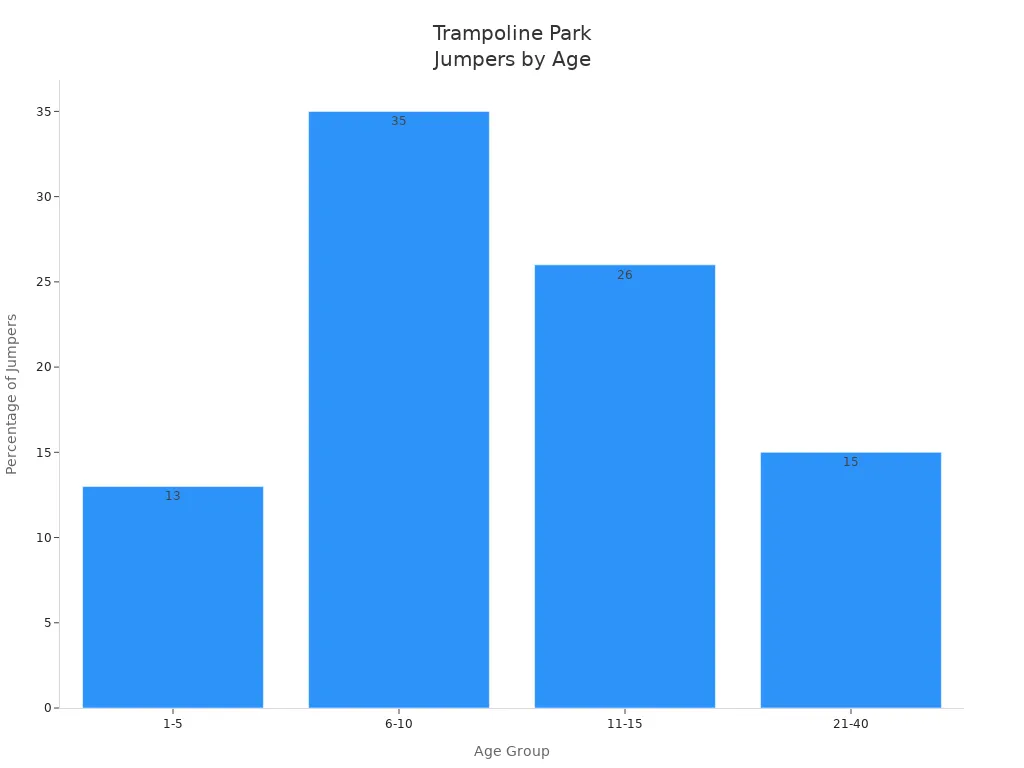
Kids under 17 make up most of the market. You’ll need waivers signed by parents or guardians. Many indoor trampoline parks add food and social spaces for adults. This makes your park a fun spot for families and encourages repeat visits.
Tip: If you see lots of families and young people in your area, your market is strong for a trampoline park.
Check out other parks in your city. See what they offer and how busy they get. Leading parks stand out by hosting big events, offering many activities, and managing crowds well. Here’s what helps them win in the market:
Description | |
|---|---|
High revenue generation | More visitors mean more money. |
Diversification of customer groups | Attracting all ages lowers risk. |
Event hosting | Parties and events bring in new guests. |
Improved customer experience | Good play and rest areas keep people happy. |
Loyalty through varied activities | More activities mean guests come back. |
Optimal operation during peak times | Smart planning boosts profits. |
Look for gaps in the market. Maybe other parks don’t have climbing walls or special zones for toddlers. You can fill those needs.
You want to attract the right people. Children are your biggest group, but teens and adults are joining in too. Here’s who you’ll see most:
Children ages 6–10 and 11–15 love jumping and playing.
Teenagers enjoy social events and competitive games.
Adults come for fitness classes and wellness programs.
Trampoline parks now welcome all ages. In some places, adults are the main visitors. In other regions, families come together because of rising incomes and city living. Parks add new features like climbing walls and parkour zones to keep everyone happy. If you know your market, you can design your trampoline park to fit your community.
It is important to know how much money you need. Starting a trampoline park can cost from $800,000 to $3 million. The price depends on where you are, how big your park is, and what equipment you pick. Here is a table that shows the main things you will spend money on:
Expense Category | Cost Range (EUR) |
|---|---|
Renting, buying, or building a facility | starting from 1,800,000 |
Trampoline equipment and interactive elements | 320,000 to 690,000 |
Audio and visual equipment costs | 50,000 – 100,000 |
Office equipment and furniture costs | 20,000 – 30,000 |
Promotion costs | 5,000 – 10,000 |
Liability insurance costs (Deposit) | 7,000 |
Additional costs (audio, visual, office, promotion) | 75,000 to 140,000 |
about 2,500,000 |
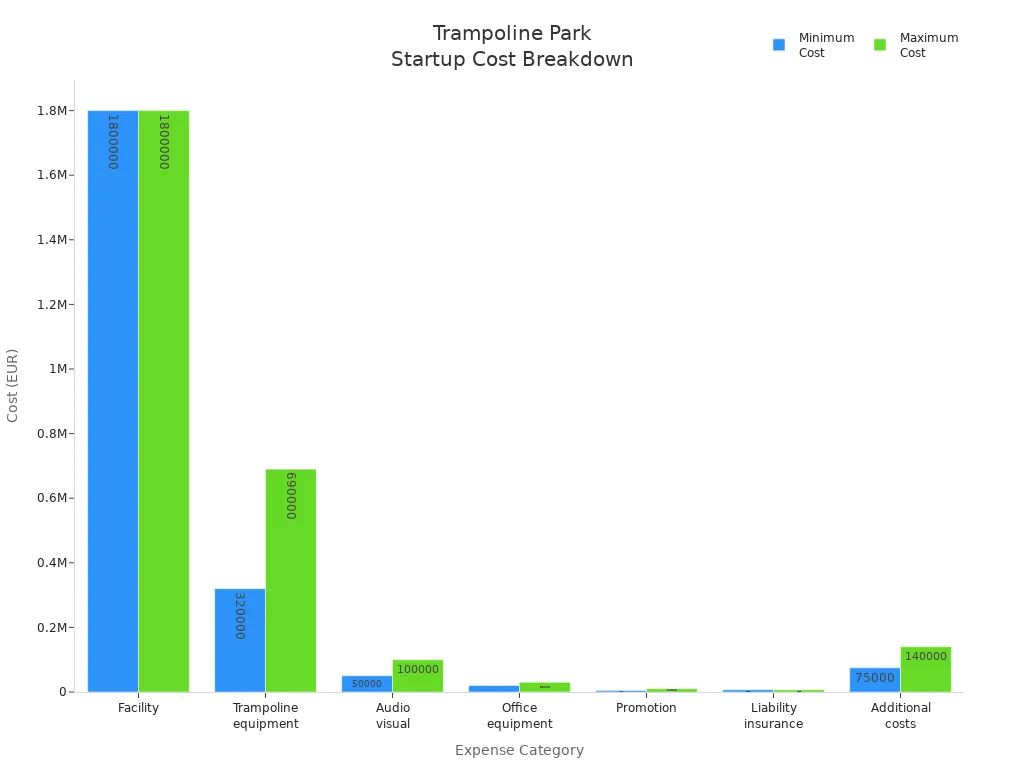
There are different ways to get money for your trampoline park. You can try franchise financing, crowdfunding, or small business loans. Private investors and business partners can also help. These choices let you share the risk and get enough money to open your park.
A good business plan helps you make smart decisions. It also helps you avoid problems. Your trampoline park business plan should include these important parts:
Component | Description |
|---|---|
Strategic Planning | Choose a good location and add fun attractions and helpful features. |
Compliance and Safety Measures | Get the right permits and licenses to follow safety rules and stay legal. |
Marketing Strategies | Use social media and local events to bring in guests. |
Know your costs, find ways to get money, and add snacks to make more profit. |
Tip: A detailed business plan helps you plan your budget and reach your goals faster. You can use your plan to guide your trampoline park business and stay on track.
You need the right equipment to run your trampoline park. Start with trampolines, basketball hoops, foam pits, and safety gear like nets and padding. Here is a quick list of what you need:
Equipment/Material | Description |
|---|---|
Trampolines | The main thing people come for, in many sizes and shapes. |
Interactive Elements | Games and obstacles that make jumping more fun. |
Safety Gear | Nets, padding, and harnesses to keep everyone safe. |
Trampoline Flooring | Buy by the square foot or get ready-made pieces. |
Refreshments | Drinks and snacks for your guests. |
Trampoline Socks | Special socks for safe jumping. |
A needs assessment helps you pick the best equipment for your park. You can match what you buy to what your customers want. This makes sure you get high-quality items that meet safety rules. Doing this keeps your trampoline park business strong and helps you save money.
You want your trampoline park to feel spacious and safe. Start by thinking about how much room you need. A small trampoline park needs at least 500 to 1,000 square meters. If you dream bigger, medium or large parks use 2,000 to 4,000 square meters or more. You should split your space like this:
60-70% for open jump zones with lots of trampolines
15-20% for foam pits, dodgeball courts, and stunt areas
10-15% for reception, waiting, and party rooms
The rest for safety padding, walkways, and emergency exits
When you choose the best location, make sure you have enough space for all these areas. You want guests to move around easily and enjoy every part of your trampoline park.
You need to decide if you want to lease or buy your location. Leasing gives you flexibility. You can test your business and move if you need more space later. Buying means you invest more money up front, but you build long-term value. Think about your budget and your plans for growth. If you want to expand your trampoline park in the future, leasing might help you adjust quickly. If you want to settle down and create a landmark, buying could be the right choice. Always compare costs and benefits before you choose the best location.
Families and groups want to reach your trampoline park easily. Look for a location with good roads and parking. Public transport helps people who don’t drive. Cycle paths and footpaths make it easy for kids and parents to walk or bike. When you choose the best location, check if people can get there without trouble. If your trampoline park is easy to find and visit, you will see more happy guests and repeat customers.
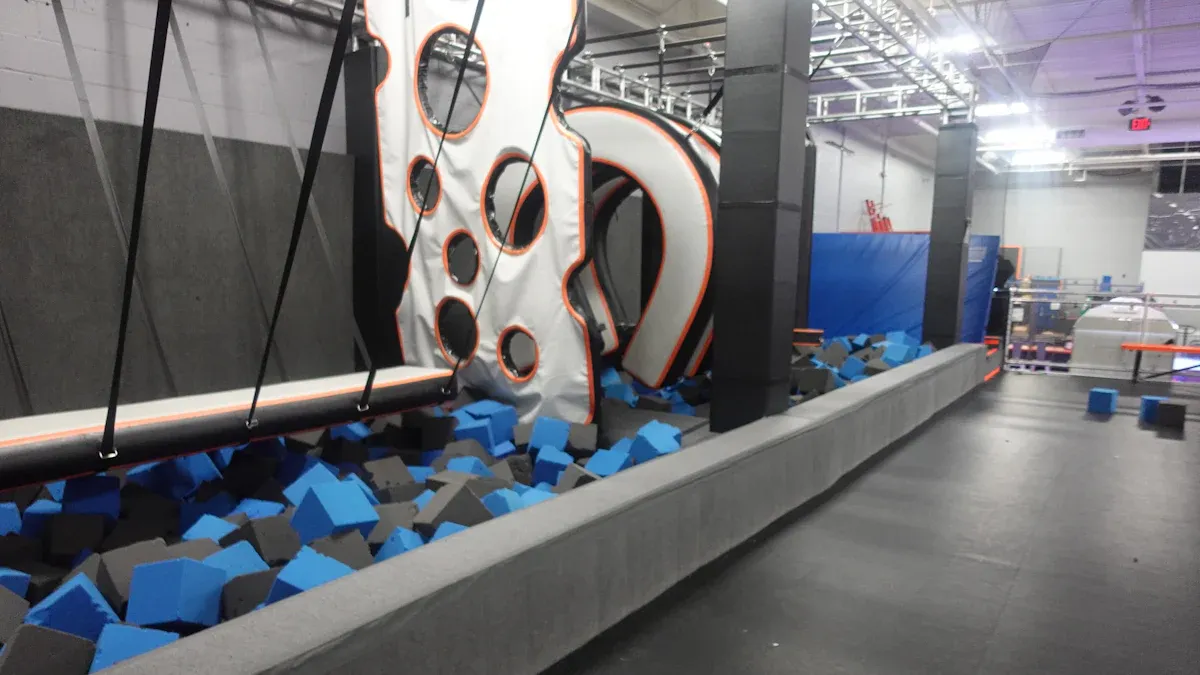
When you design your trampoline park, you must pick the right indoor trampoline equipment. You want everyone to have fun and stay safe. Vasia’s Multi-Activity Indoor Trampoline Park shows how mixing activities keeps guests happy. Here are some popular types of indoor trampoline equipment you can use:
Free jump area with flat and slanted trampolines
Trapeze jump lets people do tricks into foam pits
Trampoline parkour has obstacles for freestyle jumping
Incline trampolines let you jump off the sides
High-performance trampolines are for advanced tricks
Hexia trampolines have a special hexagon shape
Toddler area has soft trampolines for little kids
Ninja warrior course has balance and agility challenges
Always pick trampoline park equipment made from strong materials. This helps you meet safety rules and keeps guests safe. Look for equipment that lasts long and is easy to fix.
You want your trampoline park to use space well. Start by planning where each activity will go. Put the free jump area in the middle so everyone can see it. Place the toddler zone near the entrance for easy access. Keep the ninja warrior course and climbing walls in different corners to stop crowding.
Here’s a simple table to help you organize your indoor trampoline equipment:
Zone | Suggested Location | Age Group |
|---|---|---|
Free Jump Area | Center | All ages |
Toddler Zone | Near entrance | 1-5 years |
Ninja Warrior Course | Back corner | 6+ years |
Climbing Walls | Side wall | All ages |
Tip: Good trampoline park design means clear walkways, easy-to-see safety signs, and enough space between zones. This helps guests move around easily and keeps everyone safe.
You can design your trampoline park with multi-activity zones like climbing walls and play areas. These zones make your indoor trampoline equipment more fun. Families like parks with activities for all ages. When you add climbing walls, you give guests a fun challenge and a way to connect. Play zones for different ages help everyone feel included and safe.
Multi-generational activity zones help families visit together. You create a friendly space where kids, teens, and adults can all have fun. This makes customers happy and makes them want to come back. If you use these ideas, you build a place where people make memories.
You need to get licenses and permits before opening. Local officials want you to follow trampoline park safety regulations. These rules help keep people safe. Check with your city or county office to learn what you need. Most places ask for a business license, fire safety check, and health permits. Some areas need special permits for amusement parks. Get every permit before building or buying equipment. If you follow safety regulations, you avoid fines and delays.
Insurance helps protect you and your guests. You should buy liability insurance for your trampoline park. This covers accidents and injuries. Some insurance companies have special plans for parks that follow trampoline park safety regulations. You might also need property insurance for your building and equipment. Ask your insurance agent about coverage for staff and guests. Good insurance helps you fix problems fast and keeps your business safe.
You must follow strict safety regulations to keep your trampoline park safe. High side walls around trampolines stop falls. Use equipment that meets international safety standards. Here are some important standards:
ASTM F2970-22 (USA): Focuses on design, operation, and maintenance of trampoline courts.
2PfG 2524 (Europe): Guides design and operational safety, including staff training.
PAS 5000 (Britain): Specifies safety barriers and user capacity management.
XP S52-370-1 (France): Outlines trampoline surface safety and pre-jump briefings.
GB 19079.23 (China): Covers design and emergency access.
You need to follow these safety regulations every day. Here is a table with top operational safety measures:
Safety Measures | Description |
|---|---|
Remove street shoes and wear SkySocks | Reduces slipping hazards |
Follow all park rules and staff instructions | Promotes safety regulations |
Walk on and off court | Prevents running accidents |
Jump over or duck under inflatable arms | Lowers injury risk |
Land feet first and knees apart | Minimizes landing injuries |
Be aware of those around you | Encourages safe jumping |
Routine safety inspections | Ensures equipment safety |
Padded coverings on posts | Protects participants |
Safety signs posted throughout the park | Reminds users of safety regulations |
Train your staff to watch guests and enforce trampoline park safety regulations. Regular checks and clear safety signs help stop accidents. If you follow these safety regulations, you build trust and keep your trampoline park safe for everyone.
You want your trampoline park to work well. You need to hire the right people. Look for staff who like working with kids and families. Your team should be friendly and full of energy. They should have a good attitude every day. Here are some things to look for:
Safety awareness helps staff notice dangers and keep people safe.
Customer service skills help guests feel welcome and important.
Physical fitness lets staff keep up with busy days.
Teamwork helps everyone solve problems and work together.
When you pick your team, you set the mood for your park. Friendly workers make guests want to come back. They help make your trampoline park fun.
Safety training keeps your trampoline park safe for all. You must teach your staff the rules and check that they follow them. Give clear instructions and practice emergency drills often. Here is a table with safety rules your team should know:
Safety Rule | Description |
|---|---|
Only one jumper per trampoline square at a time | Stops people from crashing into each other. |
No double bouncing | Prevents wild jumps and possible falls. |
No running, pushing, or rough play | Lowers the chance of falls and crashes. |
Minimum and maximum weight requirements | Makes sure trampolines are not too full, so no one gets hurt. |
Dedicated jump zones for younger children | Keeps little kids safe from older jumpers. |
No jumping under the influence of drugs or alcohol | Stops risky jumps and serious injuries. |
You should also teach your staff to:
Follow safety steps every day.
Check equipment before opening and during busy times.
Act fast if there is an emergency.
Training often helps your park stay safe. It helps guests trust your business.
Good customer service makes your trampoline park special. You want guests to feel happy when they arrive. Teach your staff to greet visitors with a smile. They should answer questions in a simple way. Tell them to listen to feedback and fix problems quickly. When your team is kind to guests, your business gets better.
Tip: Happy guests tell their friends about your trampoline park. Good customer service brings new visitors and keeps families coming back.
You want people to remember your trampoline park. Start with a catchy name and a bright logo. Make sure your brand looks fun and safe. Build a website that shows your activities, prices, and hours. Add lots of photos and videos. People love to see what they can do before they visit. Social media helps you reach families and fitness fans. Post updates on Facebook and Instagram. Share stories, special deals, and happy moments from your park. Targeted ads on these platforms help you promote your park to the right market. Respond to comments and messages quickly. This makes guests feel welcome.
You need to connect with your community to attract customers. Join local events and sponsor school activities. Hand out flyers at sports games or community fairs. Work with local bloggers and influencers. Invite them to visit and share their experiences. Their reviews help promote your trampoline park to a wider market. Build partnerships with nearby businesses. Offer group discounts for clubs or schools. These steps help you reach more people and grow your market. Community engagement brings more families through your doors.
Tip: A friendly relationship with your neighborhood can boost your reputation and promote your park better than any ad.
A big launch can make your trampoline park stand out in the market. Plan a grand opening with fun games, music, and prizes. Invite local leaders and families. Offer special deals for the first week. Use social media to promote your launch and share live updates. Host contests or giveaways to keep the excitement high. After your launch, keep the momentum going with regular events and new activities. This keeps your park fresh in the minds of your market and helps you promote your business all year.
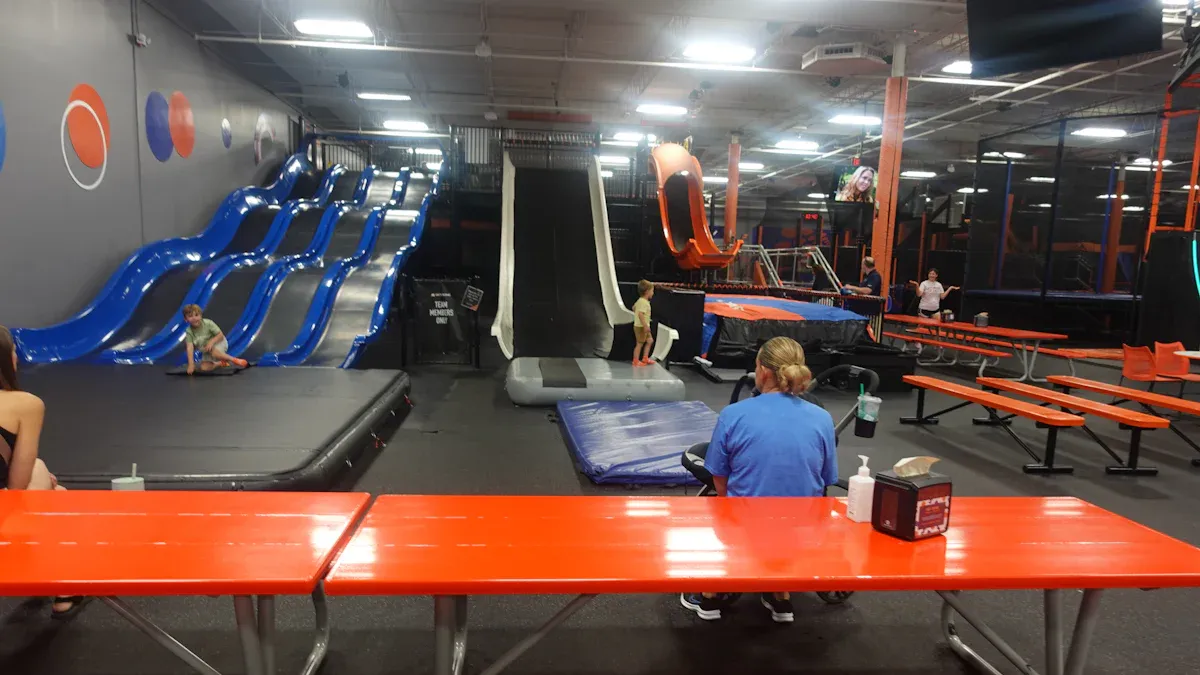
Running your trampoline park business takes focus every day. You need to open on time and check all equipment before guests arrive. Staff should walk through each area and look for anything unsafe. You want to keep the park clean and organized. Make sure you have enough supplies, like trampoline socks and snacks. Staff should greet guests and help them sign waivers. You can use a checklist to keep track of daily tasks:
Inspect trampolines and play zones
Clean floors and seating areas
Restock refreshments
Review safety rules with staff
Test emergency exits
Tip: A daily routine helps your trampoline business run smoothly and keeps guests safe.
You want every visitor to leave happy. Start by making the check-in process easy. Staff should answer questions and help families find the right zones. Offer birthday packages and group deals. You can set up a snack bar with drinks and treats. Friendly staff make a big difference. Smiles and quick help turn first-time guests into regulars. You can use a table to track what guests enjoy most:
Guest Favorite | Description |
|---|---|
Free jump area | Open space for fun |
Climbing walls | Challenge for all |
Snack bar | Quick refreshments |
Party rooms | Special celebrations |
Ask guests what they like. You can use surveys or suggestion boxes. Happy guests help your trampoline park business grow.
Feedback helps you improve your trampoline business. Listen to what guests say. If someone has a problem, fix it fast. You can set up a simple feedback form at the exit. Staff should thank guests for sharing ideas. Use feedback to train your team and update your park. Sometimes, you get great ideas for new attractions. Respond to reviews online and show you care. When you handle feedback well, you build trust and make your trampoline park business stronger.
You want your trampoline park to be special. Adding new attractions keeps guests interested. Try themed events or glow nights for extra fun. You can set up obstacle courses for more excitement. Make play zones for different age groups. Some parks add climbing walls or foam pits. Ninja warrior courses are also popular with families. These features help you get more visitors. When you offer new activities, guests want to come back. Hosting birthday parties brings in new groups. Fitness classes attract even more people. If you update your attractions often, your trampoline park will grow.
Franchising helps your trampoline park business grow fast. You can let new owners use your brand and design. This way, you reach new cities without starting over. Many trampoline parks use franchising to expand quickly. You can give franchisees support and training. Marketing tools help them succeed. When you choose franchising, you help others and grow your own business. This works well because families everywhere want safe places to play.
The trampoline park industry changes all the time. You need to watch new trends to stay ahead. Here is a table with popular trends now:
Trend | Description | Examples in Action |
|---|---|---|
Advanced Safety Protocols | Digital waivers and real-time safety checks. | DEFY uses digital waivers for easy check-in and safety. |
Membership Programs | Tiered memberships for loyalty and repeat visits. | Elevate Trampoline Park made $2 million from memberships in one year. |
Immersive Experiences | Themed events and attractions for guests. | Urban Air Adventure Park hosts glow nights to draw crowds. |
Technology-Driven Operations | Mobile apps for tickets and guest engagement. | DEFY’s app lets guests buy tickets and sign waivers on their phones. |
Health and Wellness Integration | Fitness classes and wellness events. | Get Air Trampoline Park offers trampoline fitness classes. |
Sustainability Practices | Eco-friendly lighting and recycling programs. | Jumpstreet uses LED lights and recycling to help the environment. |
You can use these trends to make your trampoline park better. Try digital check-ins or membership deals. Eco-friendly features help the environment. If you follow what’s popular, your trampoline park will stay fun and fresh.
You’ve learned the key steps for starting a trampoline park with indoor equipment. You need to plan each detail, focus on safety, and keep your goals clear. Opening a trampoline park takes effort, but you can create a place where families have fun and stay active. If you dream about opening a trampoline park, start your plan today. You might discover new rewards and build a business that brings joy to your community. Want more tips? Reach out for expert advice before you begin.
Kids, teens, and adults all have fun at a trampoline park. You can find special zones for toddlers, challenging courses for older kids, and fitness areas for grown-ups.
You train your staff to watch jumpers and enforce safety rules. You use high-quality equipment and post clear safety signs. Regular checks help prevent accidents.
Yes, you need trampoline socks. These socks help you grip the surface and reduce slipping. You can buy them at the park or bring your own if allowed.
You can book parties and events at most parks. Staff help you set up, and you get access to party rooms, snacks, and fun activities for your group.
Wear comfortable clothes that let you move easily. Avoid jewelry and loose items. You want to stay safe and enjoy every activity at the park.

